
There are tourist attractions that have been ruined by the beauty that makes them so popular. I was worried that the Grand Palace might be one of them, but it’s still a meticulously cared-for architectural wonder that you must see if you’re in Thailand. I was fortunate to visit as tourism restarted and was one of the only people there.

I actually intended to visit the Grand Palace after Wat Pho, but it was getting on for 11 AM that day, so I assumed it’d be too crowded. As it happens, on the day I did visit, it was about 10:30 AM by the time I arrived after a taxi driver with a Special Grand Palace Rate™ (couldn’t be bothered to argue over a few quid) dropped me in the wrong place. Despite that, it was almost empty, even though there seemed to be quite a few people in the queues. I think it was the combination of the pandemic measures ending (the Thailand Pass had just been phased out) and the time of year – May’s average highs of 35 ºC are too much even for many heat lovers, which is ironic considering that 15 ºC is too hot for me… but you know what I’m like. I saw a cheap flight and jumped without even considering the weather.

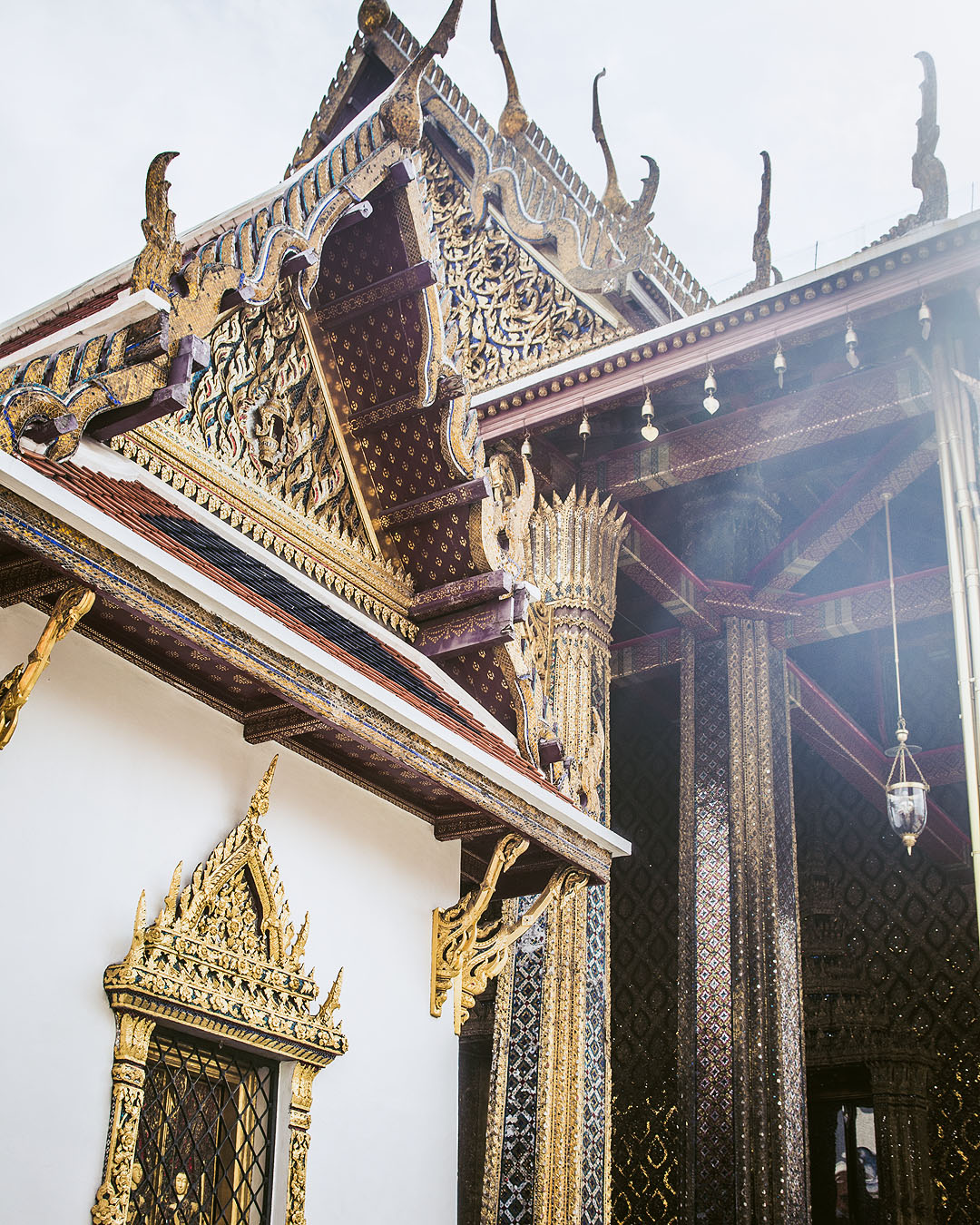


The entrance fee was 500 baht (£12), one of the most expensive in Thailand, but it was worth it. Once I walked into the complex, there was surprisingly serene silence. The sun gleamed on intricate gold details and illuminated pretty tiles wherever I looked. Even the floor seemed squeaky-clean.

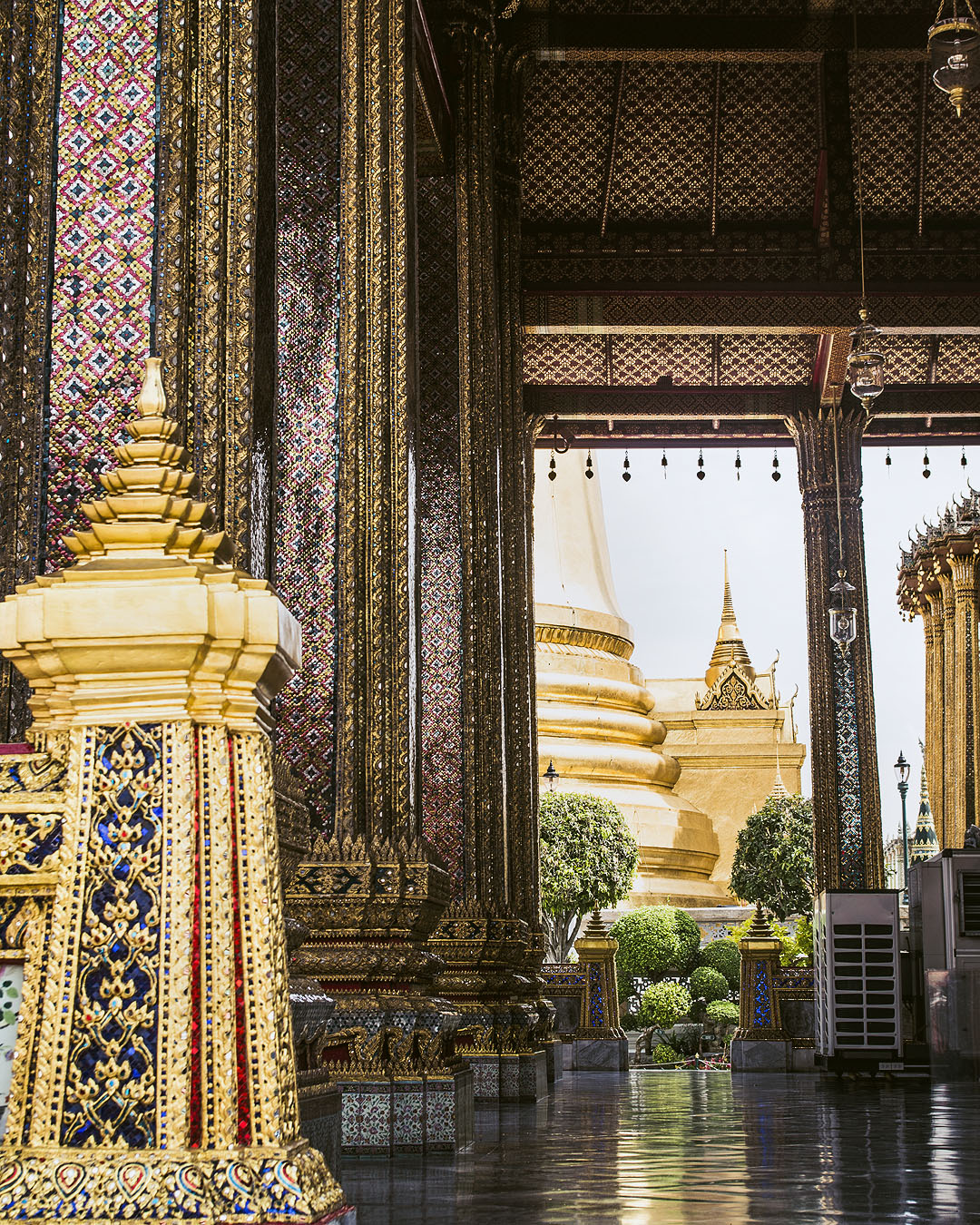
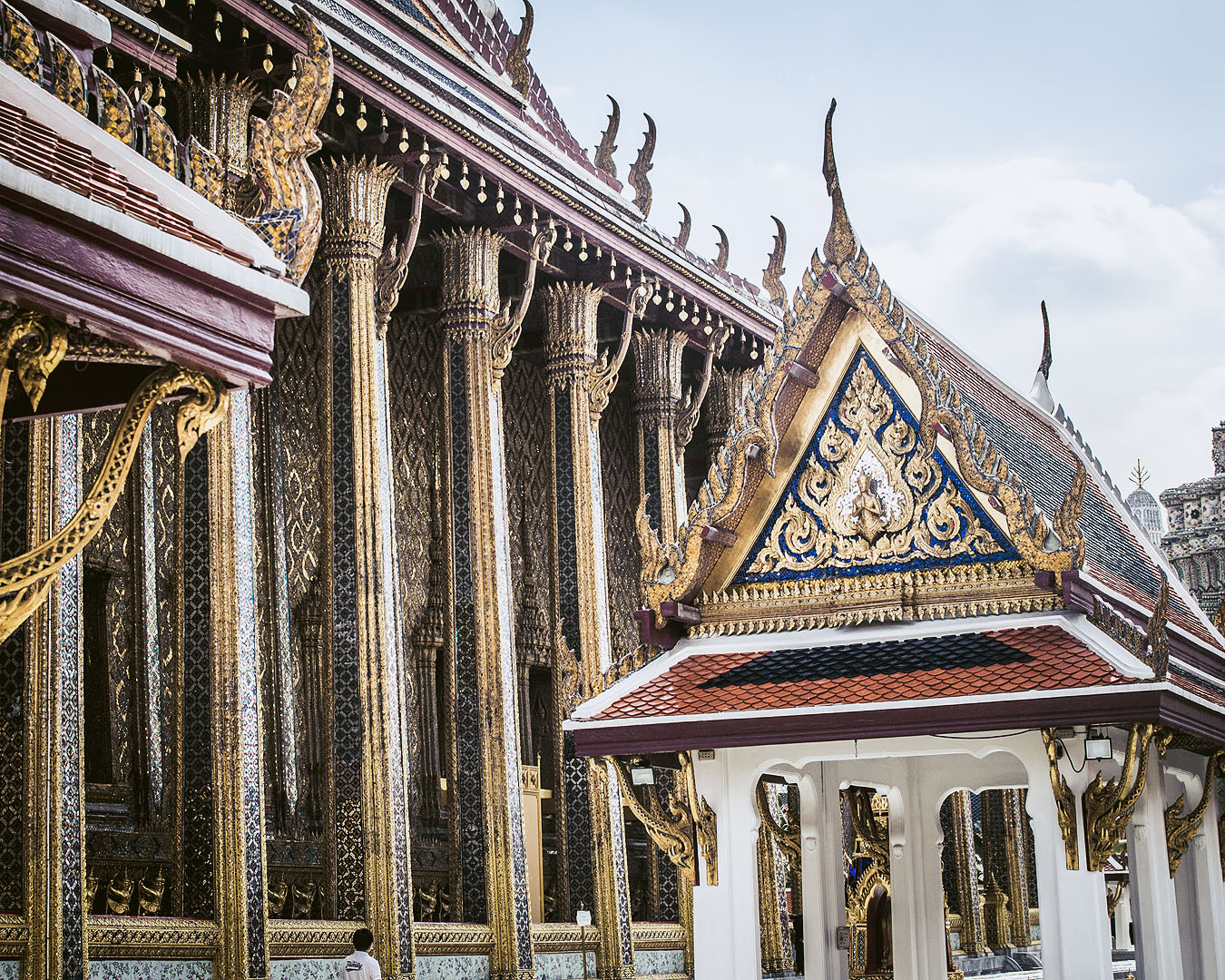
The first building to steal my attention was the most majestic of them all, the Phra Ubosot, the ordination hall that houses the famous and sacred Emerald Buddha. Every bit of it, from the columns to the walls to the roof, is impressively detailed and colourful. Even though it’s obviously been so well looked-after and was renovated in 1831, it’s hard to believe it was originally built in 1783! I did go inside, but photos aren’t allowed and since there were people praying, I felt a bit like I was intruding no matter how respectful I tried to be, so I left quickly.


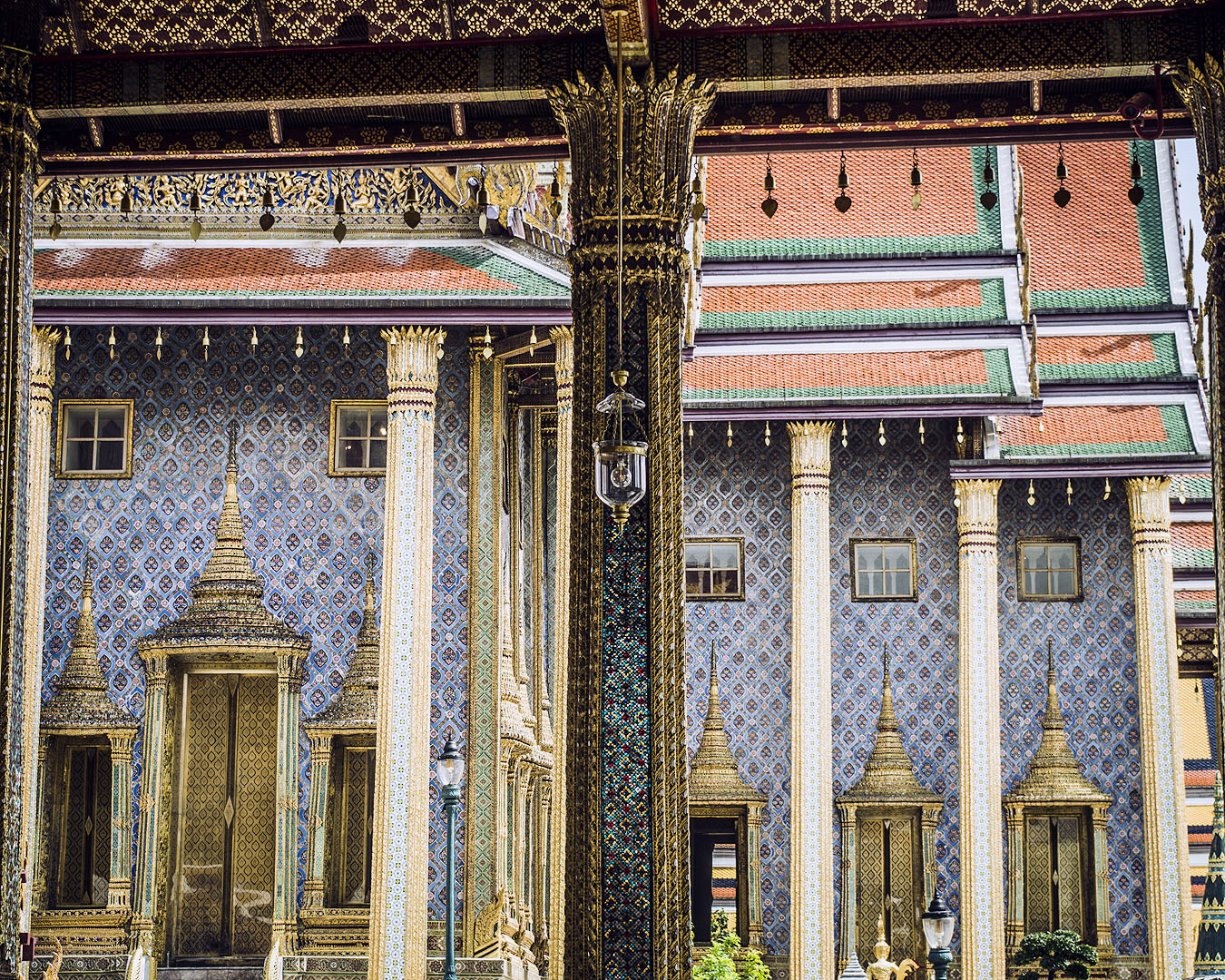


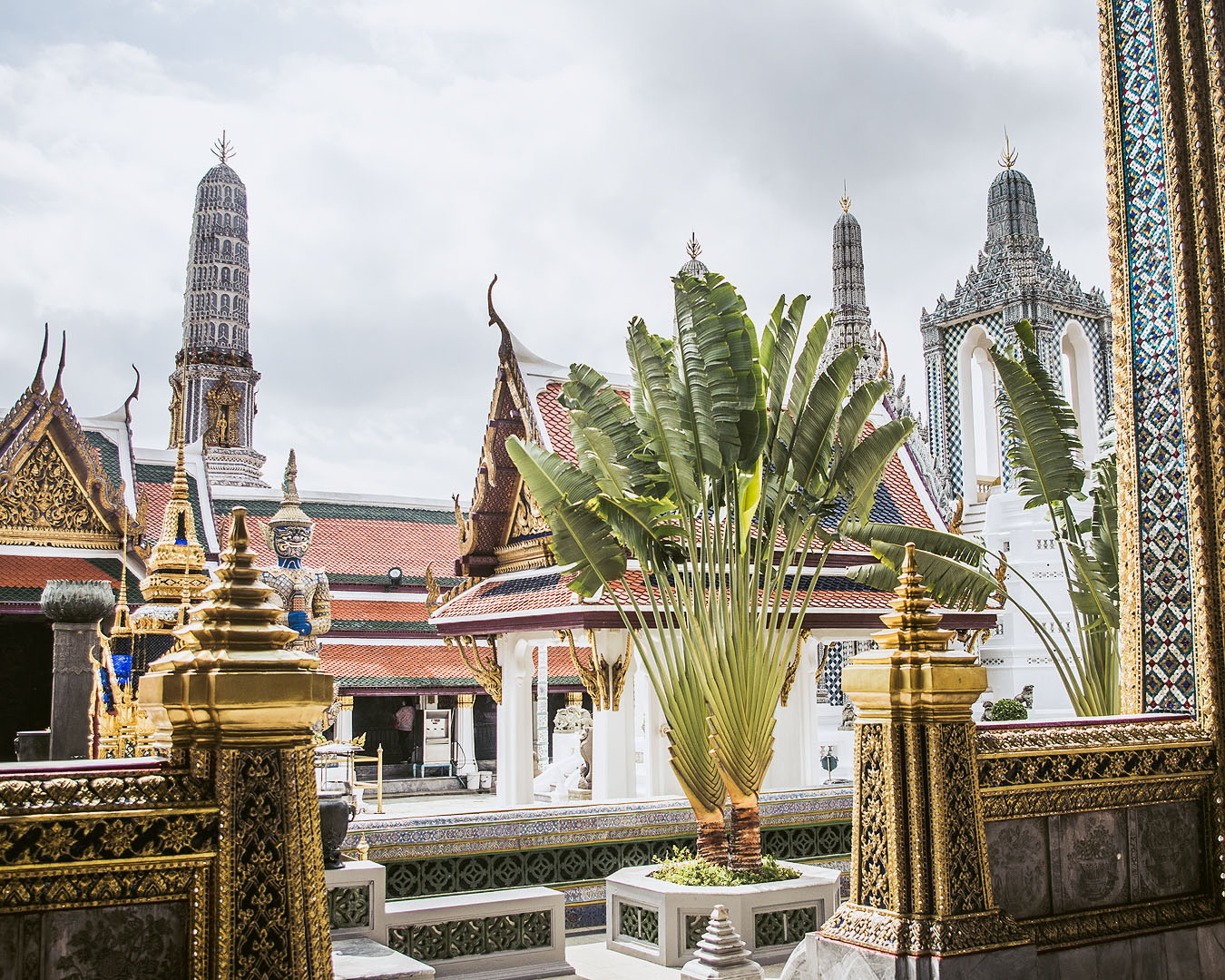
Opposite the Phra Ubosot is the almost-equally-majestic Prasat Phra Dhepbidorn, the Royal Pantheon, with blue mosaic walls and gilded doors. It was built to house the Emerald Buddha in 1856 and rebuilt after a fire in 1903, but it ended up being too small for ceremonies, so it now houses statues of eight kings.
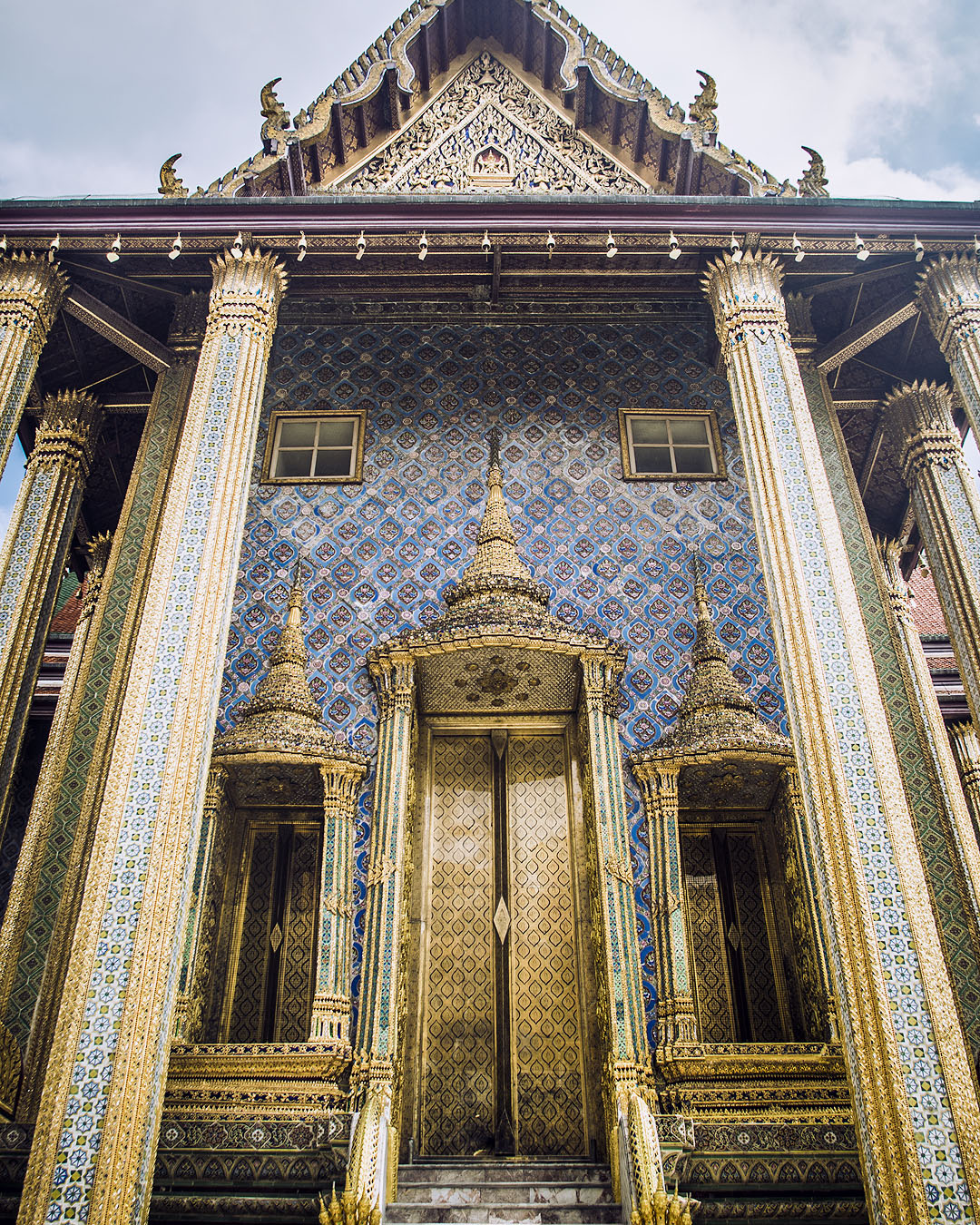
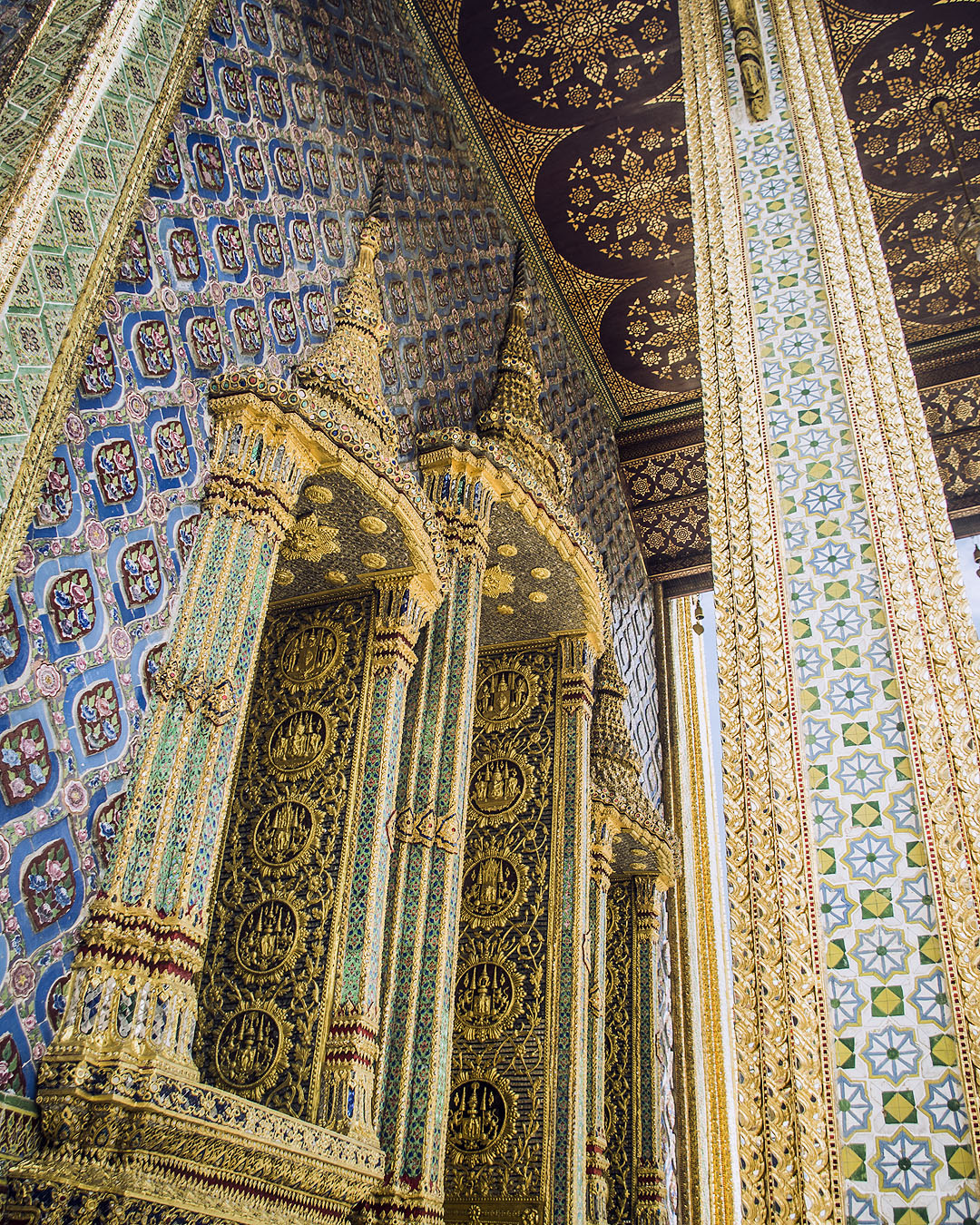
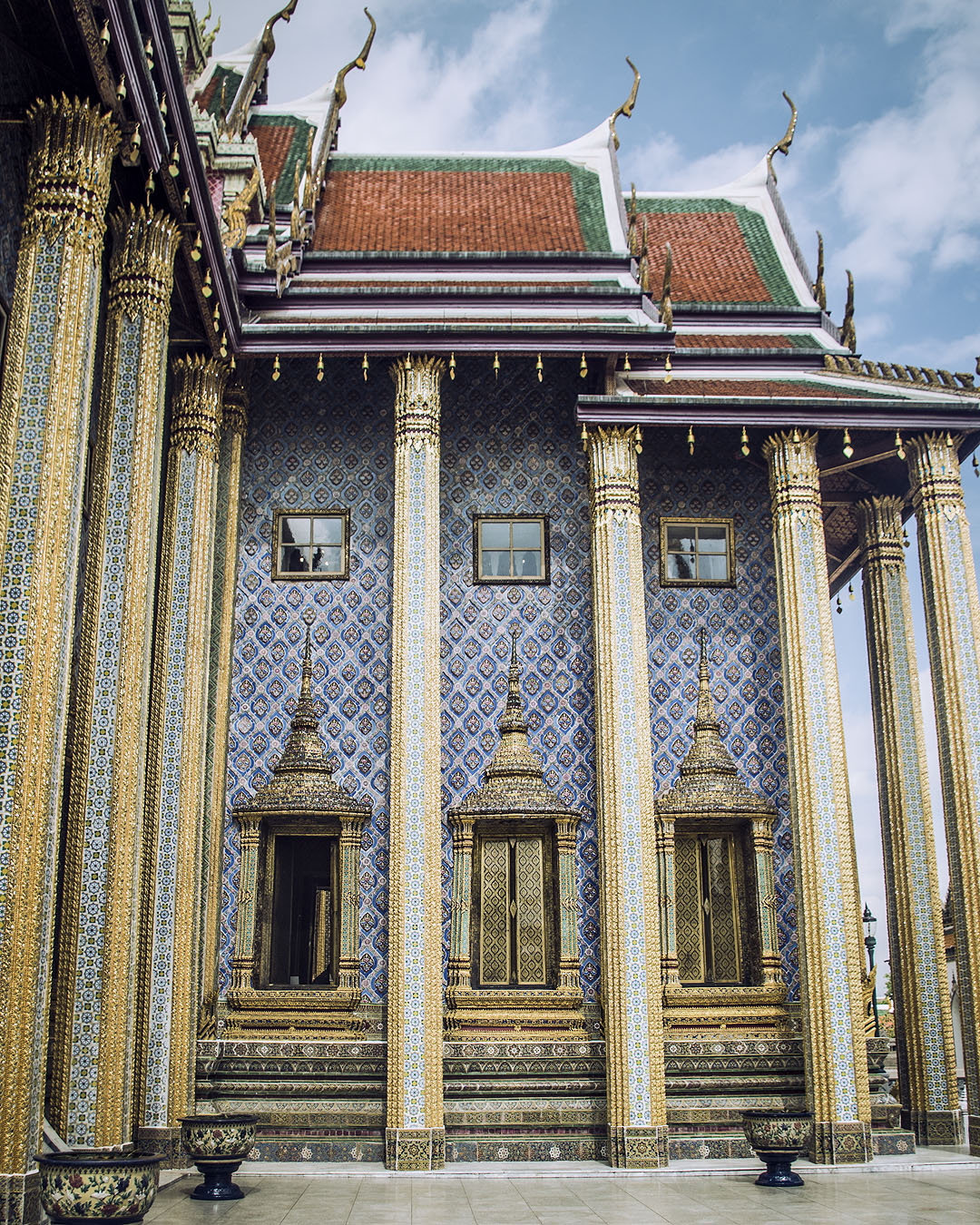

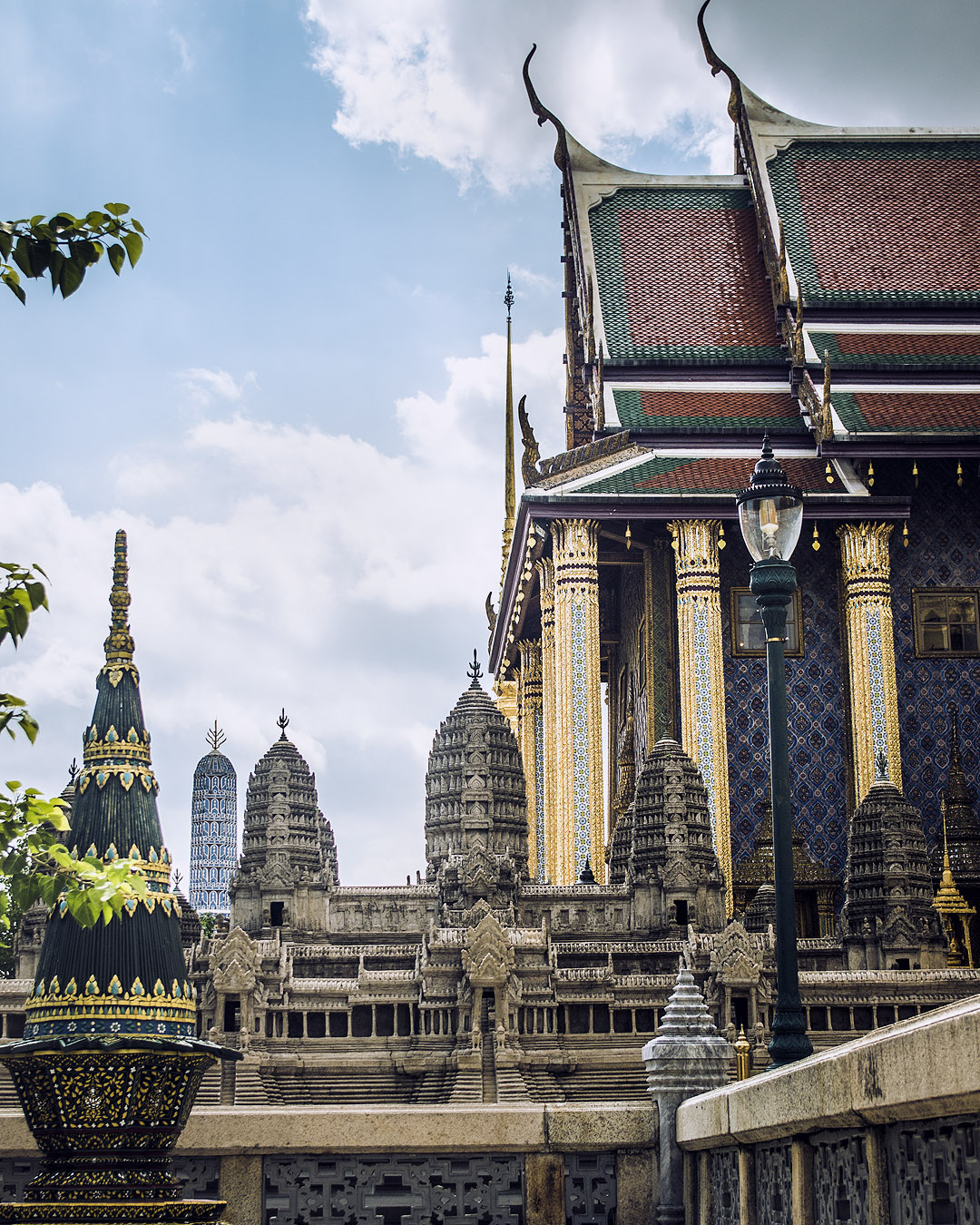
There’s a model of Angkor Wat in Cambodia by the Royal Pantheon – you can see in the last of the above images. I admittedly wondered what it was doing there, but the internet tells me it was built by King Rama IV so his subjects could see what it looks like after it was deemed unfeasible to move an actual ruin to Bangkok.
I could see the distinctive, golden Phra Siratana Chedi from almost everywhere in the complex. It was built in 1855 to hold relics of the Buddha from Sri Lanka, which influenced its design as well.
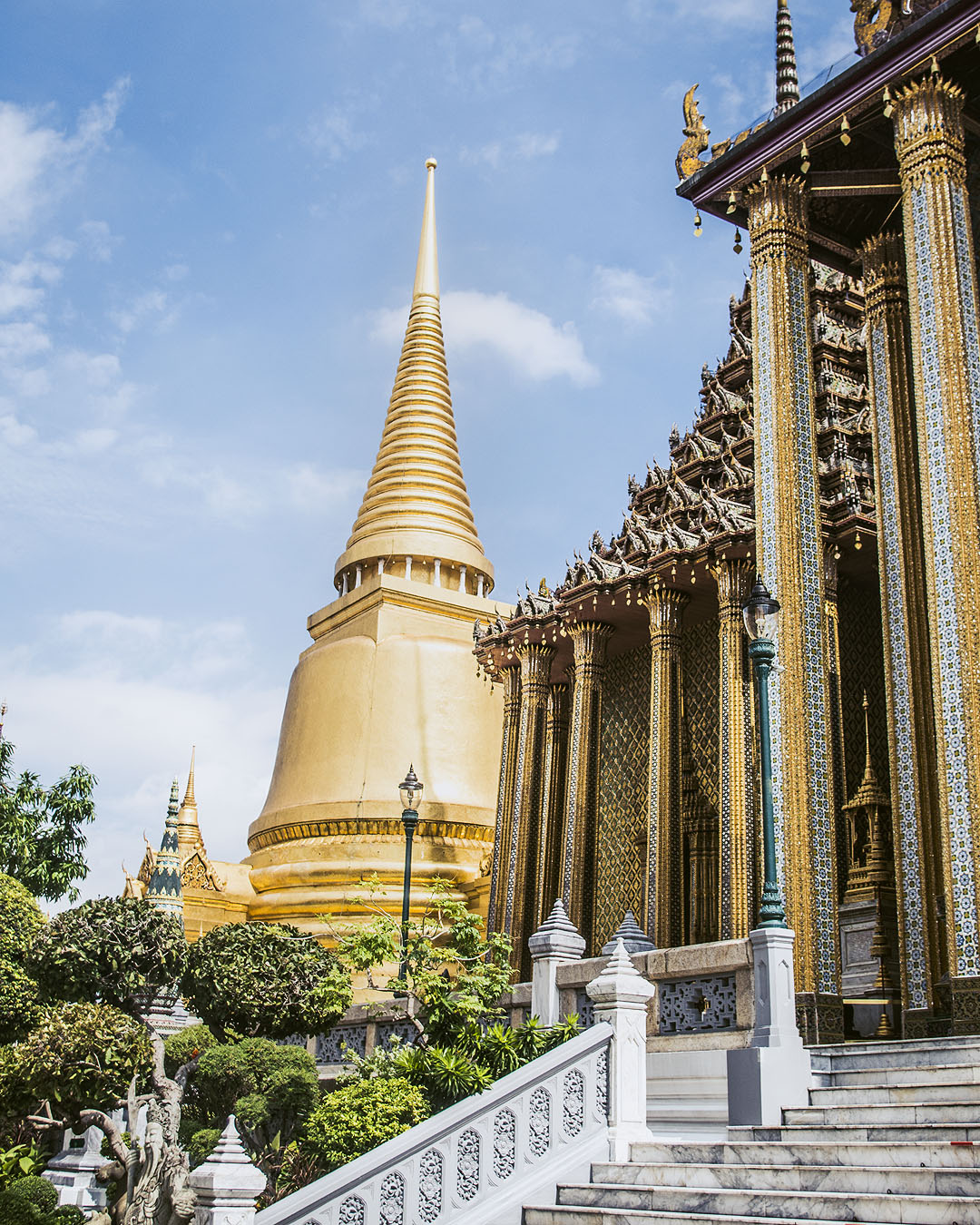
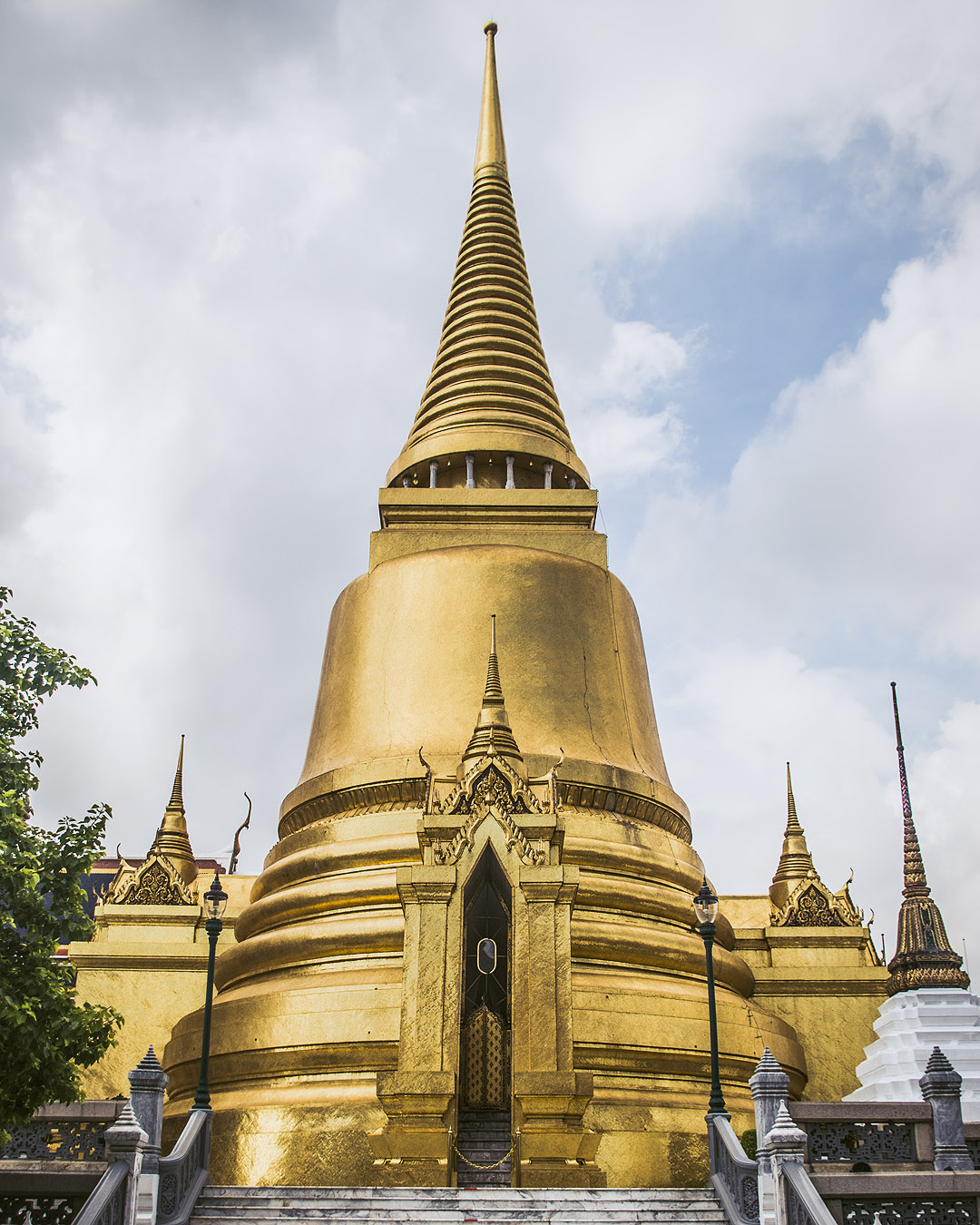
On the terrace with the pantheon and chedi is the Phra Mondop, a library containing sacred texts, including a mother-of-pearl cabinet that houses the Tripitaka (Buddhist scripture). I enjoyed admiring the green and gold mosaic walls.
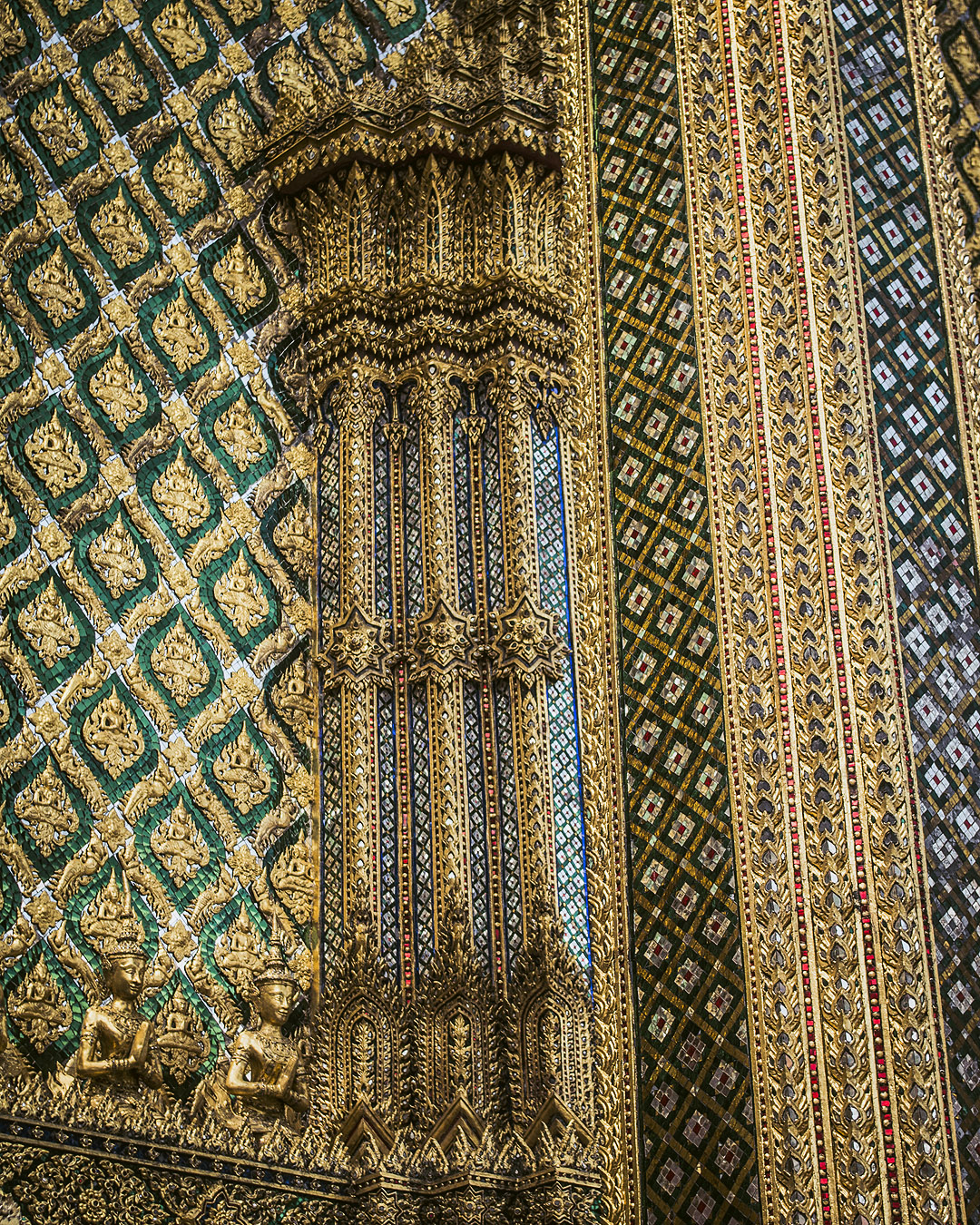
I also took some photos of Hor Phra Monthian Dharma, an additional library, and Hor Phra Naga, a building with white walls originally built to contain a Buddha image from Ayutthaya, which now houses ashes of the royal family. Not quite as striking as some of the other buildings, but still beautiful.
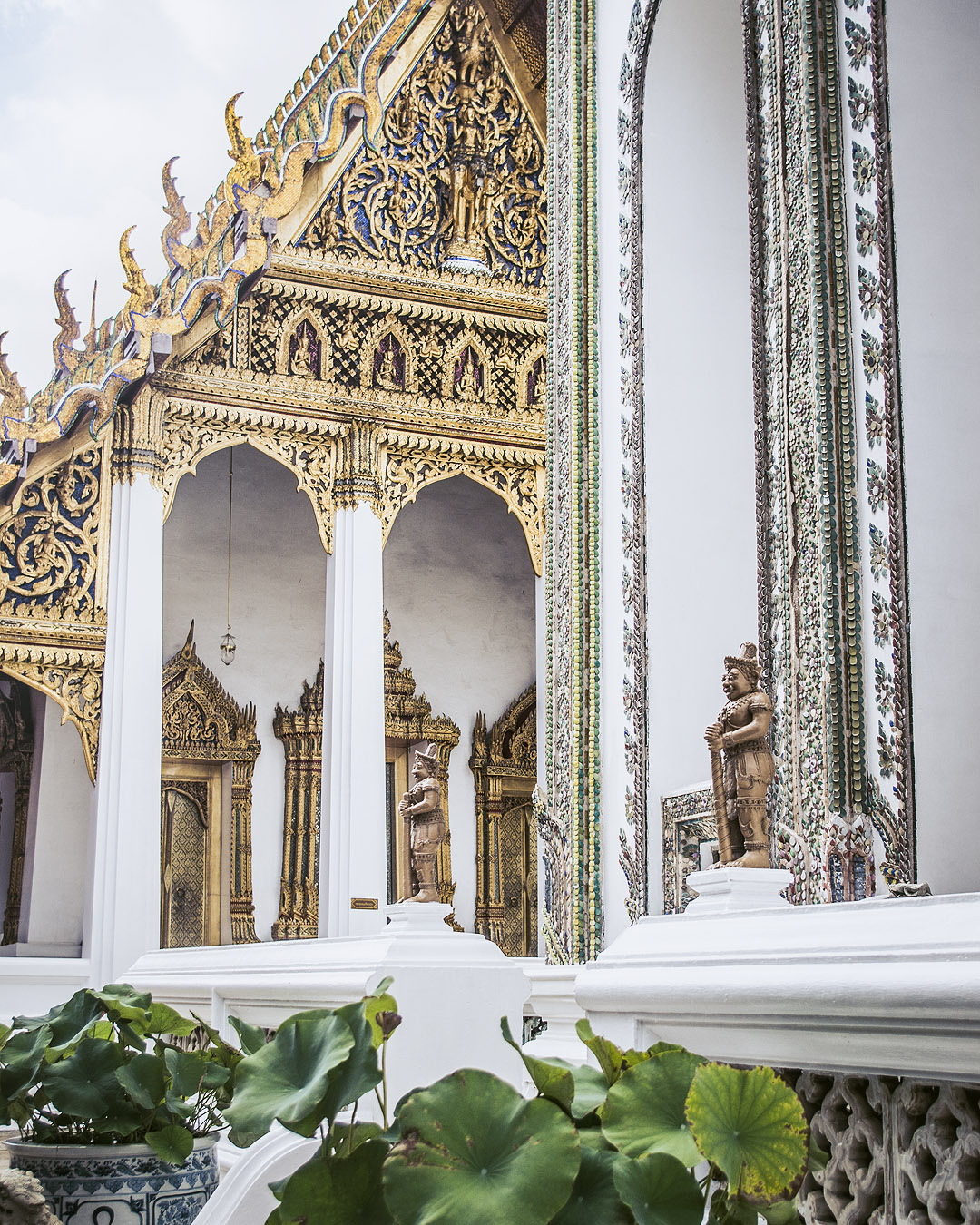
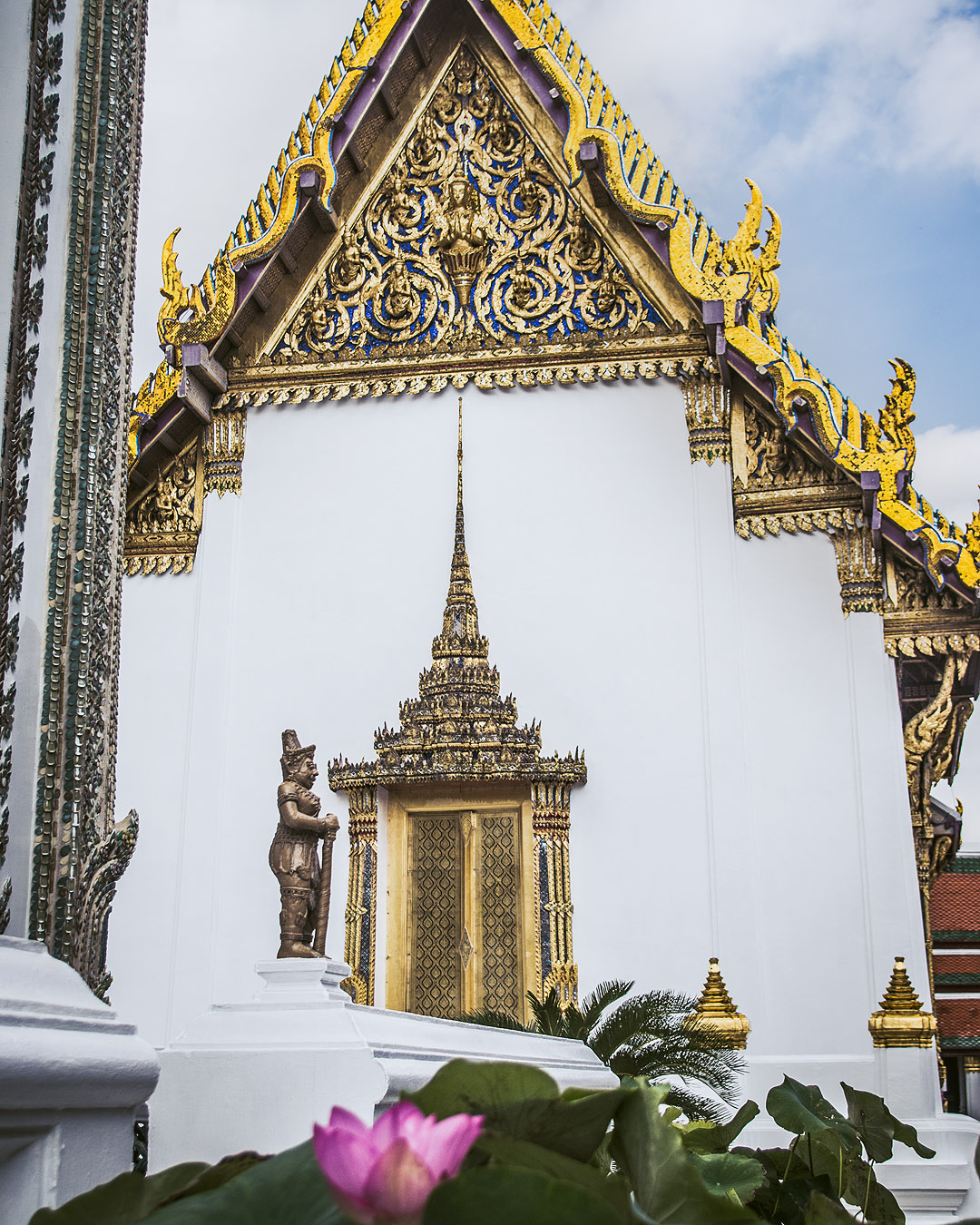
I wish I’d taken more photos of Hor Phra Gandhararat, a hall with walls decorated with colourful porcelain, but I hardly had any knowledge of the Grand Palace before visiting, so I probably missed some things I would’ve paid more attention to if I’d learned more or had a guide. All the history I’ve included in this post is stuff I’ve learned since then! I enjoyed looking at the Ramakien murals that surround the temple in corridors, anyway, where there was a bit of shade to escape the heat. At least it’s easy to appreciate all the stunning architecture even without knowing much. By the way, the Buddha image in Hor Phra Gandhararat is said to invoke rain.
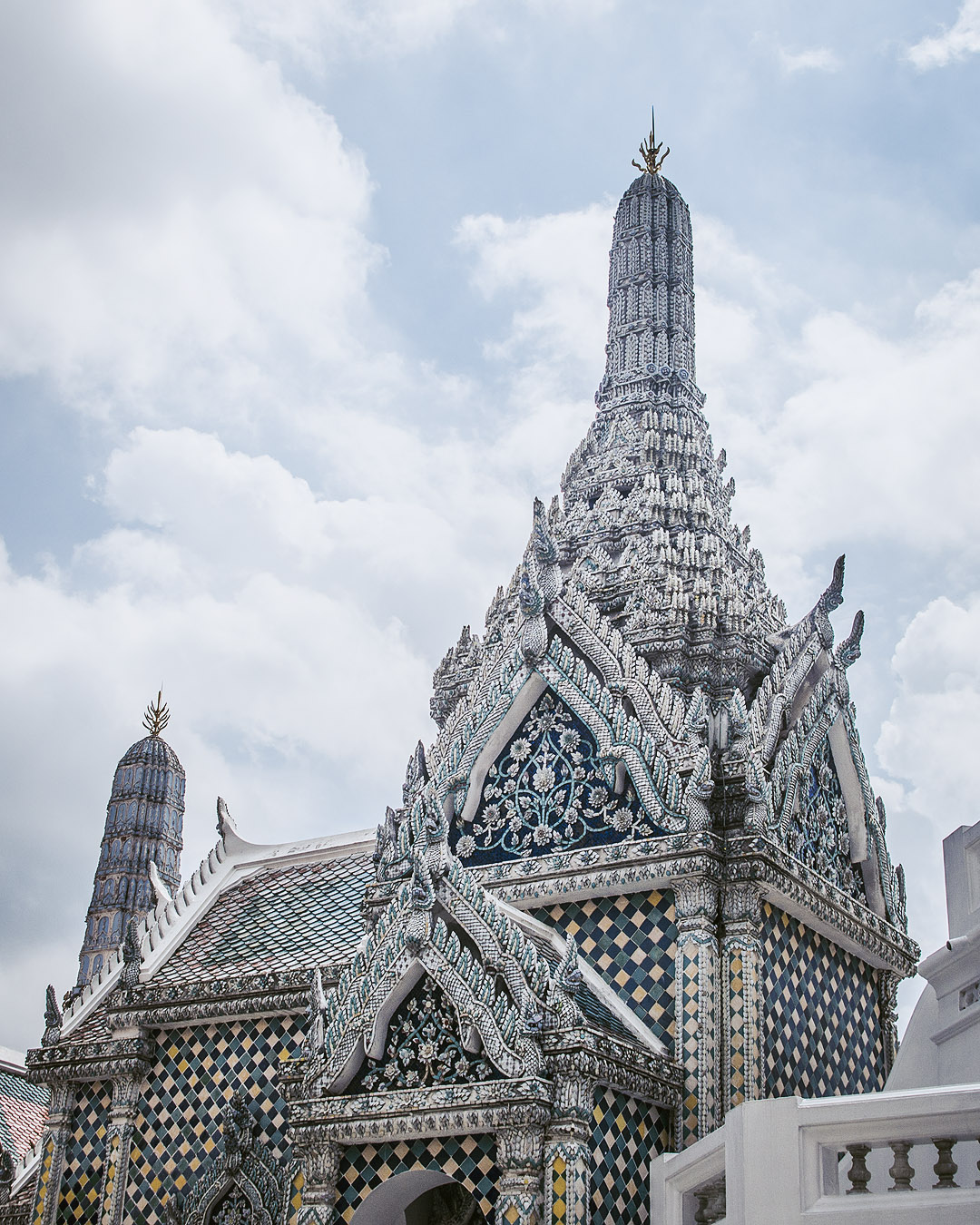
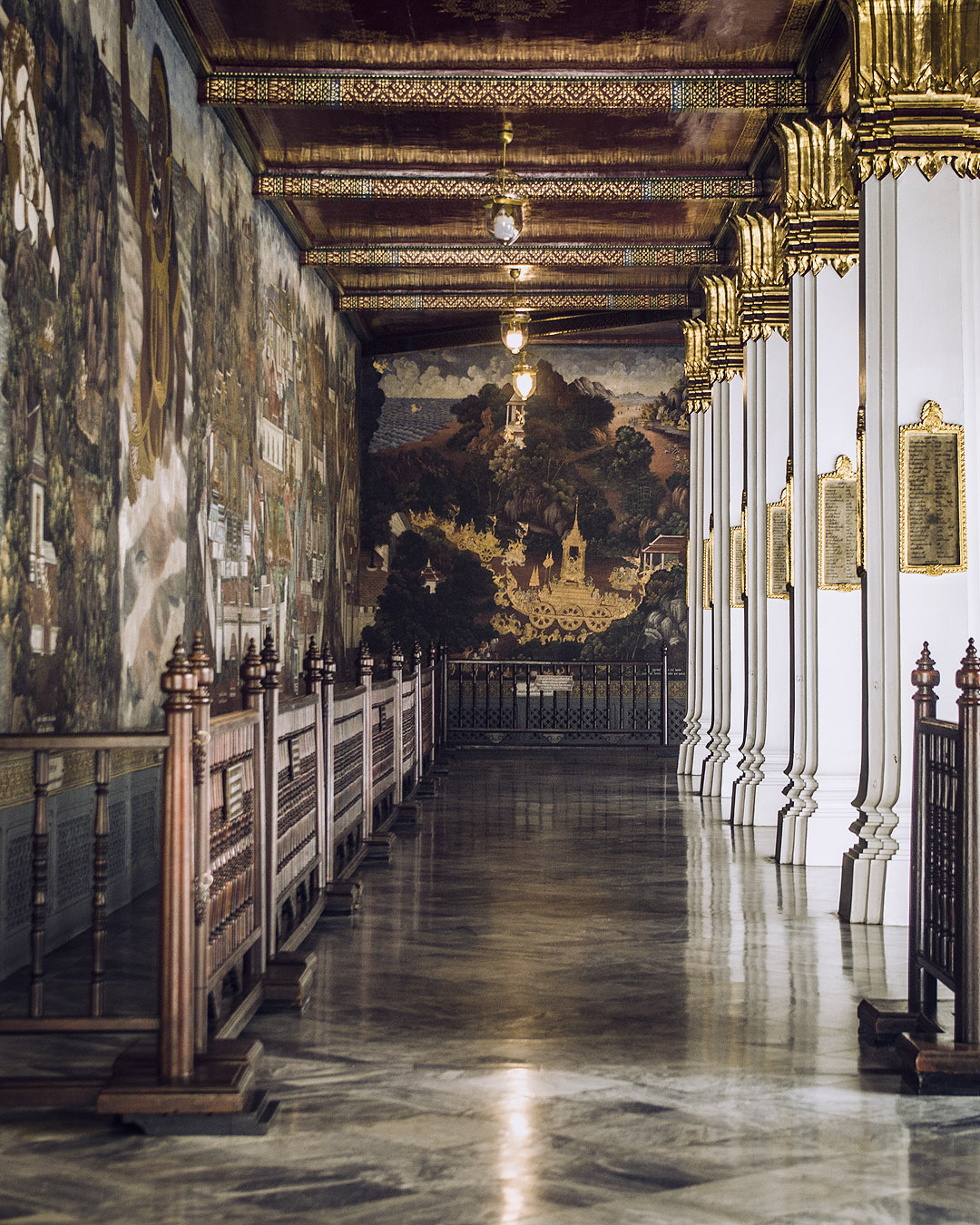

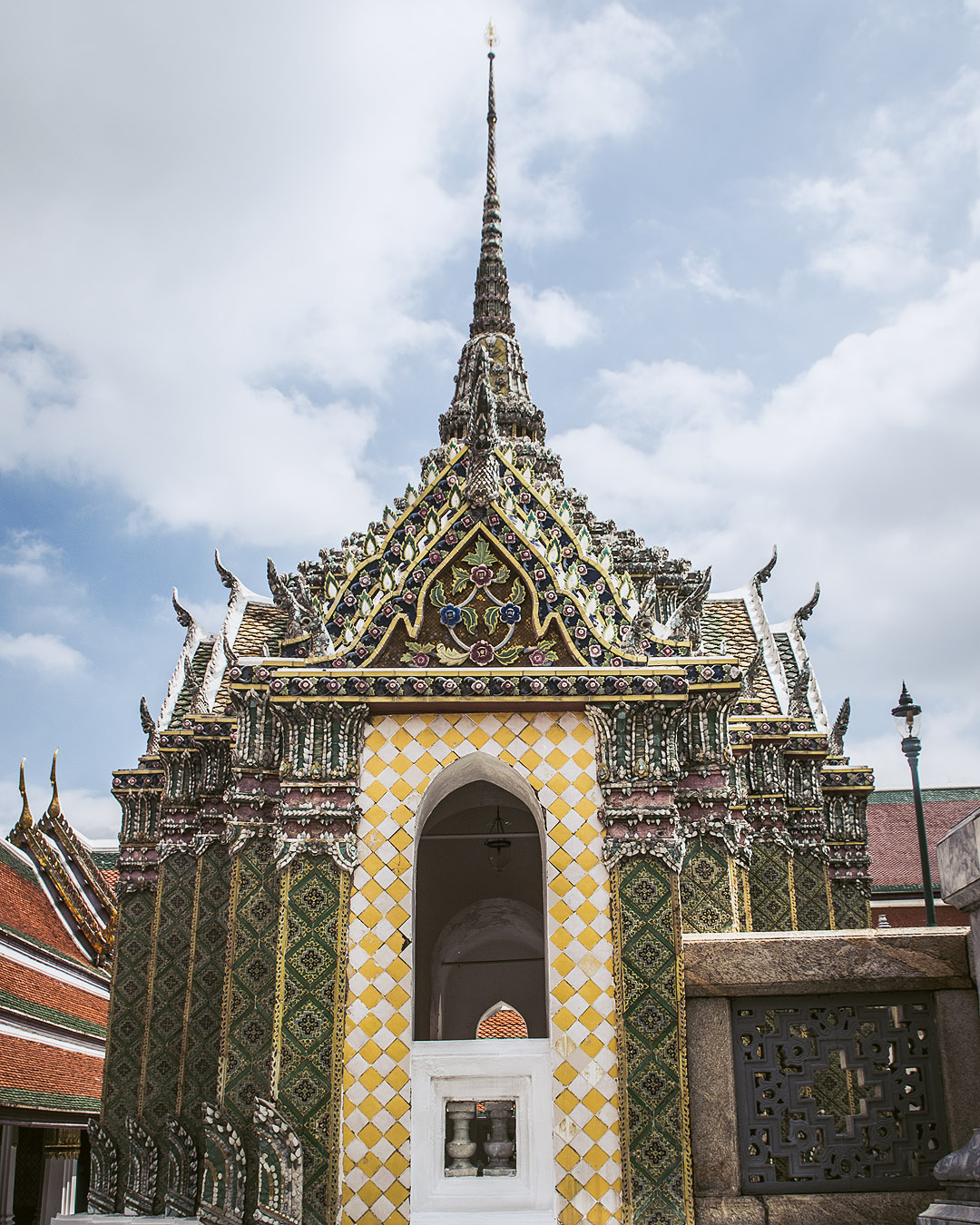
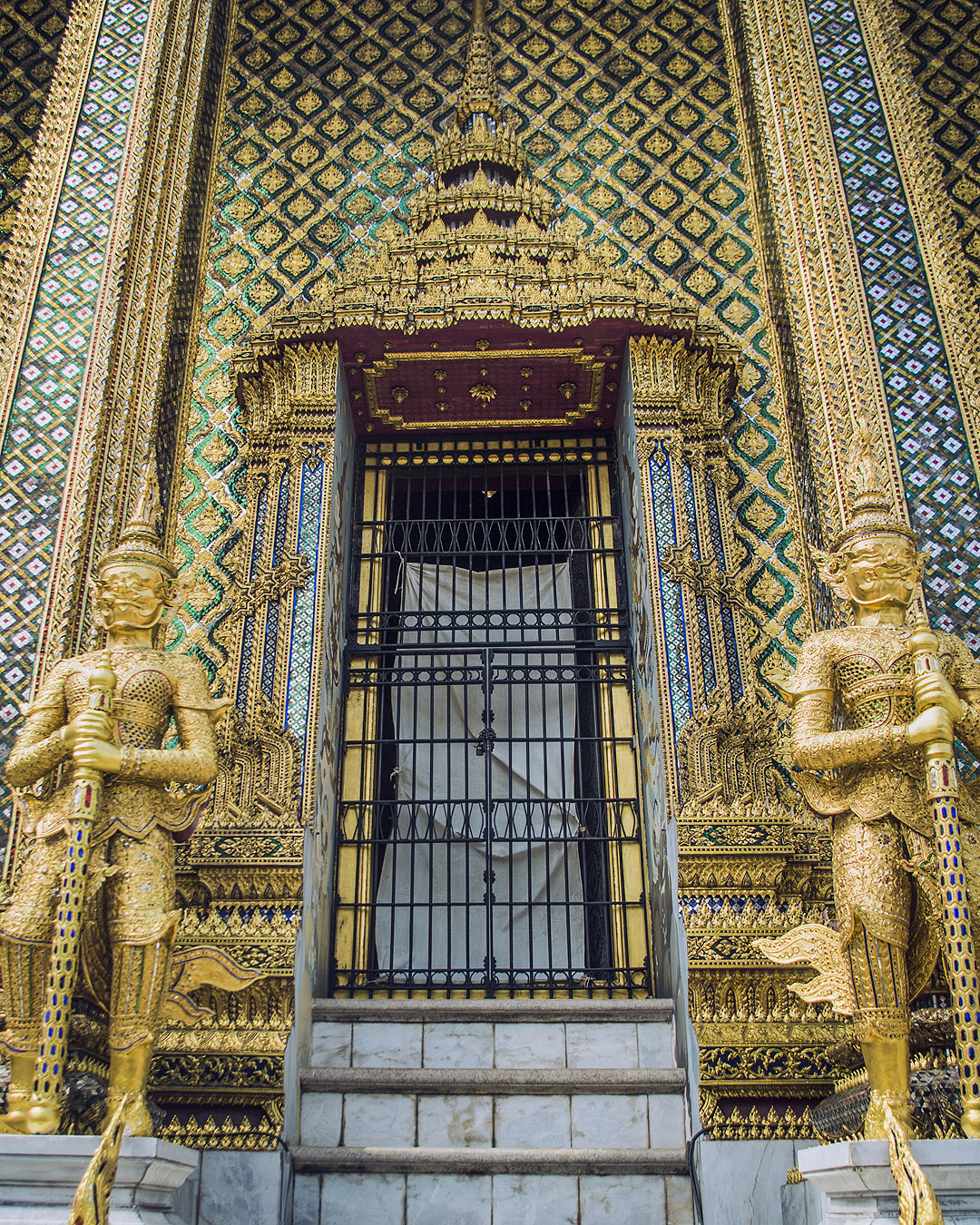
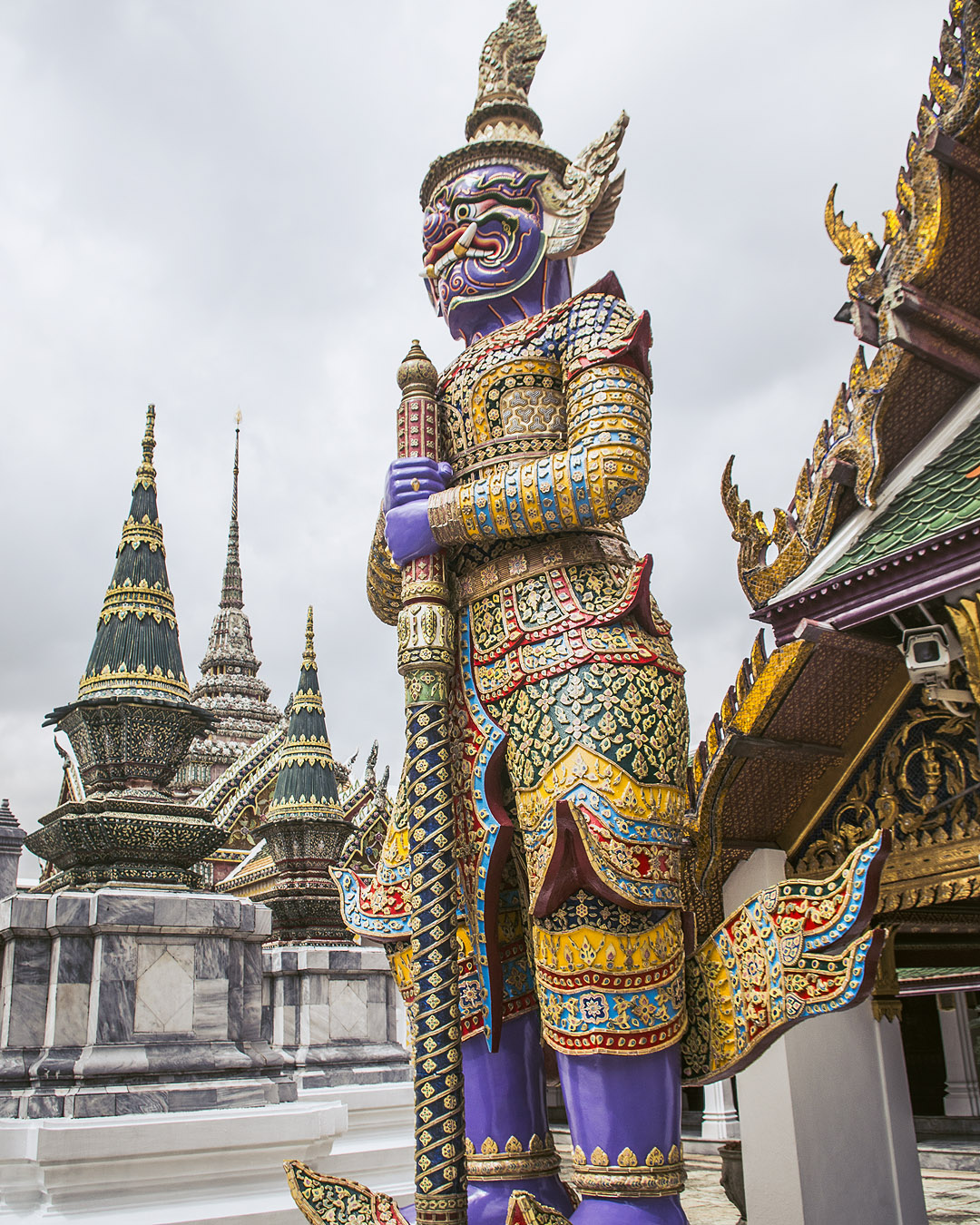
I had one last look at the Chapel of the Emerald Buddha before leaving the Wat Phra Kaew complex. I’m sure you could just keep taking photos of it and every one would be slightly different! The demon guardian I photographed below is one of many said to protect the Emerald Buddha from evil spirits.



Outside Wat Phra Kaew are several royal halls. Although the most beautiful buildings are arguably the ones within Wat Phra Kaew, I enjoyed marvelling at the intricate architecture before finding the café and some nice Thai tea ice cream. The fan in there was glorious. I also met some sweet girls from Bahrain.

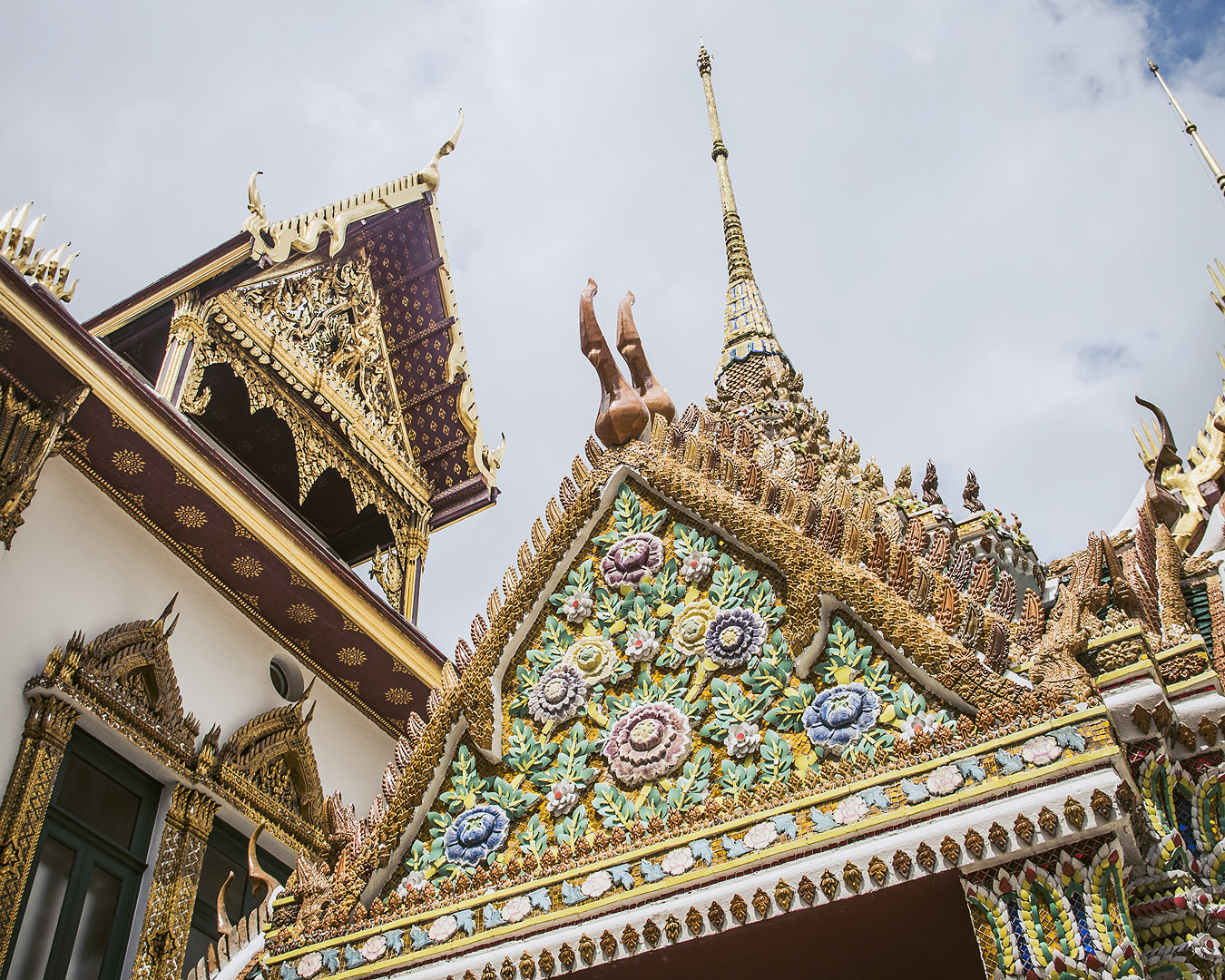
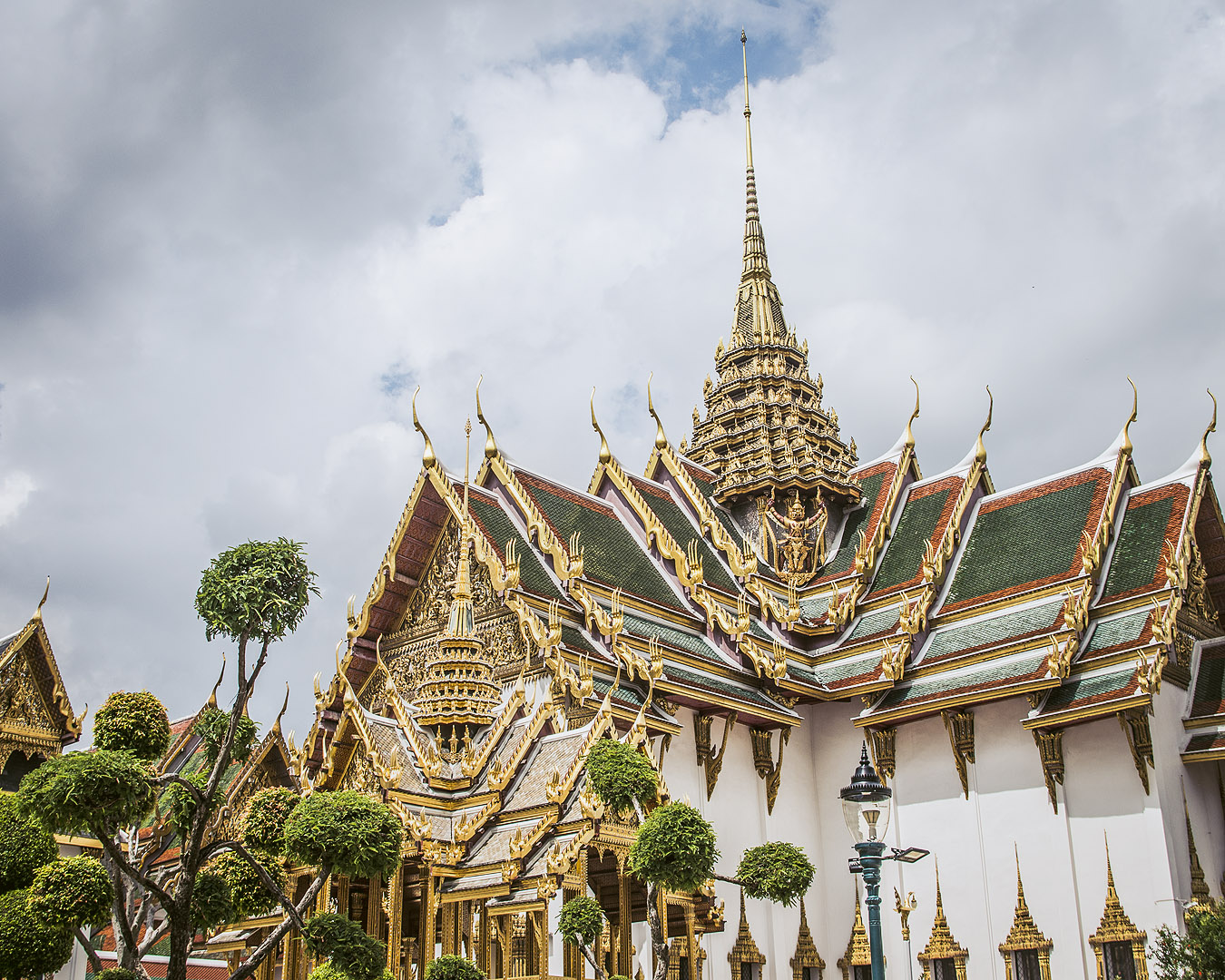

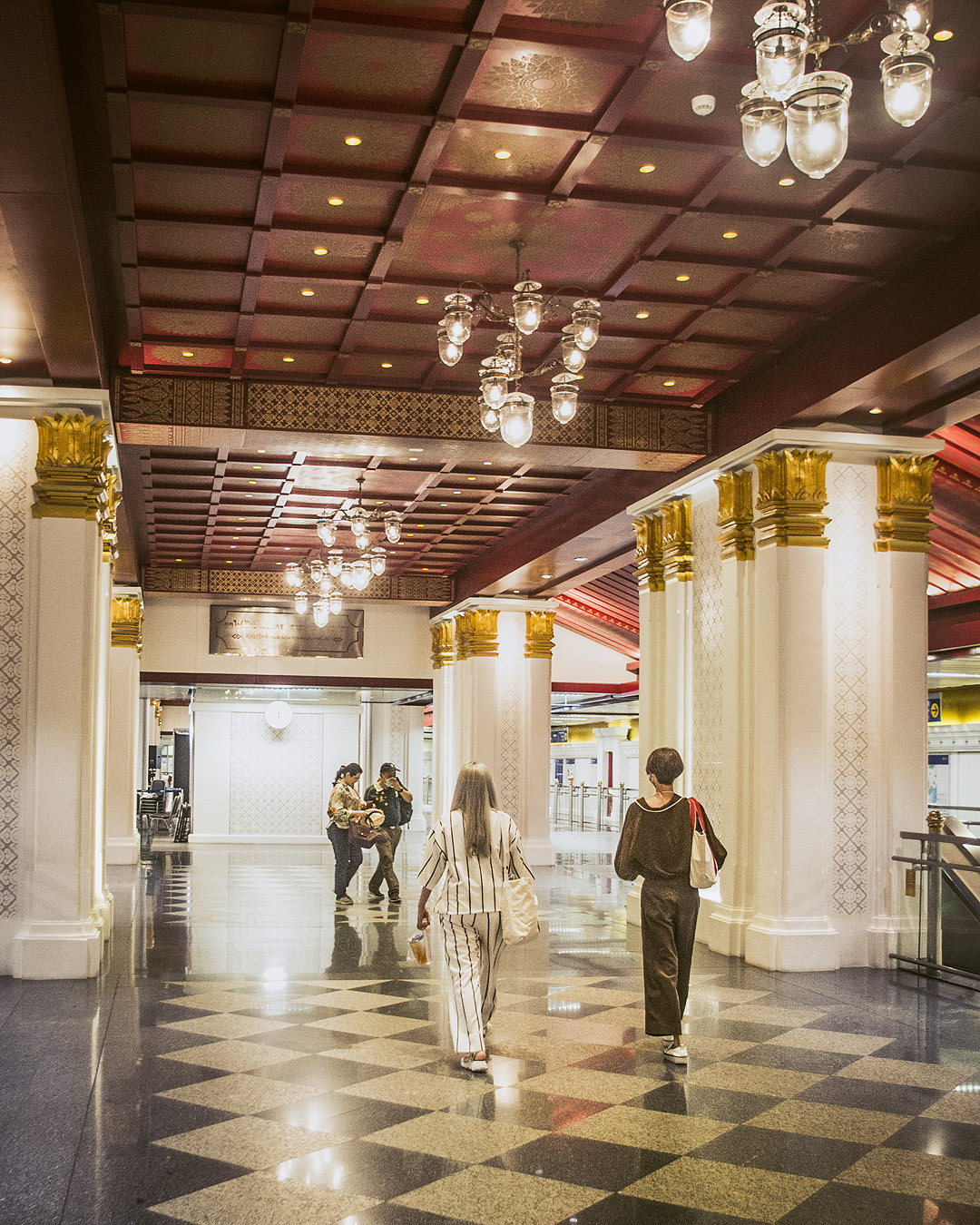
Although I love the photos I took, I remember thinking as I walked around that it’s something you really need to see with your own eyes. It is absolutely as beautiful as it’s cracked up to be, and if you somehow only see one attraction in Bangkok, it should probably be the Grand Palace. Even the nearest MRT station, Sanam Chai, is beautiful!
 Atlas and a Camera
One response to “The beauty of Bangkok’s Grand Palace”
[…] first visit was to Pak Khlong Talat after visiting the Grand Palace. It’s reasonably easy to find from there and Wat Pho, but I have the sense of direction of […]